

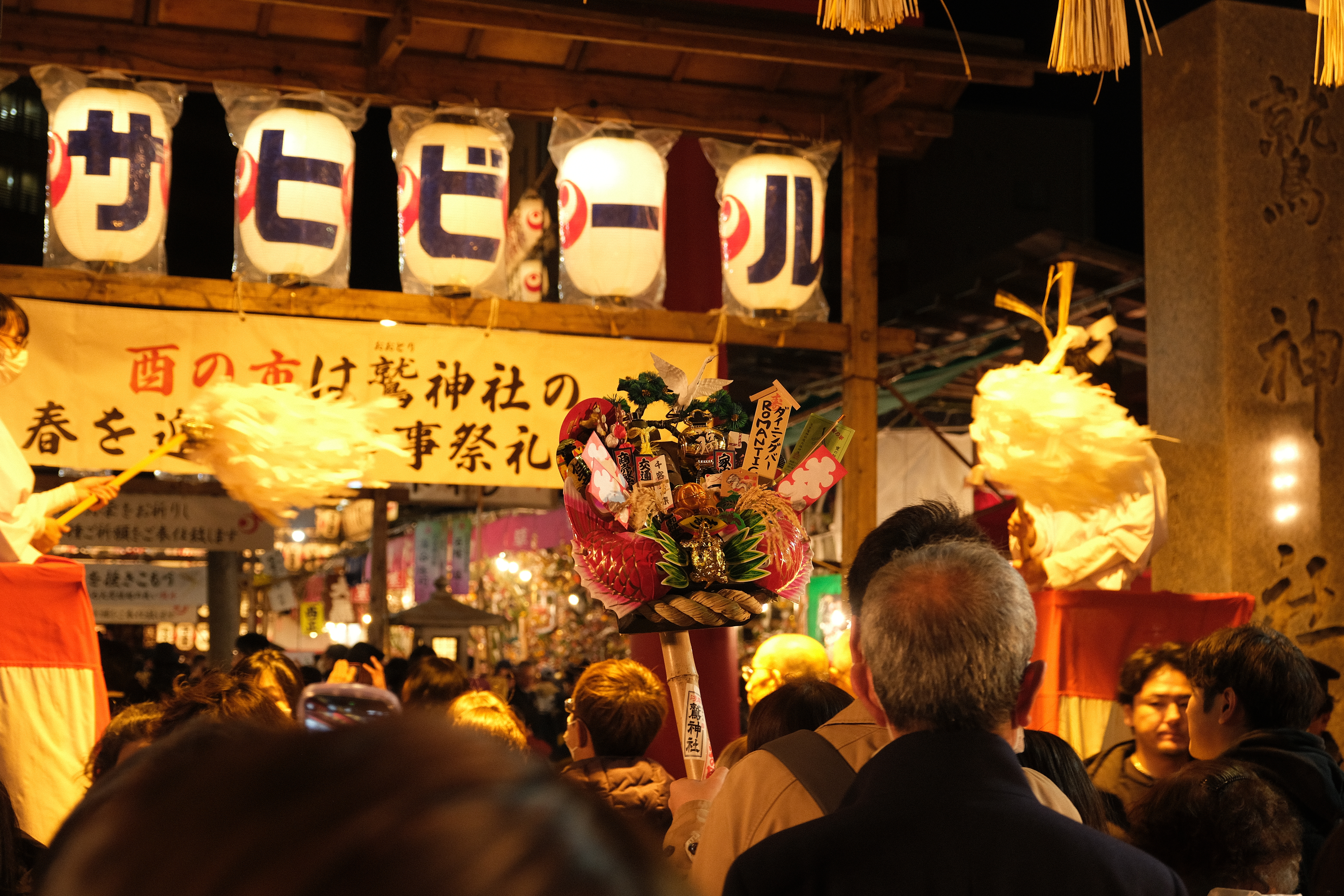
Asakusa's Otori Shrine holds Tori-no-Ichi on two days in 2026. Ichi-no-Tori on Saturday, November 7 has already taken place. The next one is Ni-no-Tori on Thursday, November 19, running from midnight (0:00) through 24:00 that day. There is no San-no-Tori this year, so November 19 is the last chance in 2026.
Tori-no-Ichi is a festival held on the "rooster days" of November to pray for good fortune and prosperous business. It is best known for its richly decorated lucky rakes, called engi kumade. If you are staying in Asakusa in mid-November, you can walk there from the Asakusa area.
Asakusa Tori-no-Ichi 2026 at a Glance
- Venue: Otori Shrine (Otori-sama), 3-18-7 Senzoku, Taito City, Tokyo
- Dates: Ichi-no-Tori, November 7 (Sat, finished) / Ni-no-Tori, November 19 (Thu)
- Hours: 0:00 to 24:00 on each day, 24 hours in total
- San-no-Tori: None in 2026
- Scale: According to the shrine's official website, about 700,000 to 800,000 people visit each year, with around 150 kumade shops and 750 stalls in and around the grounds
- Parking: The shrine provides no parking on festival days and asks visitors to use public transport
What Is Tori-no-Ichi?
According to shrine tradition, Yamato Takeru no Mikoto hung a kumade on a pine tree in front of the shrine to give thanks after a victorious campaign. The day he returned was a rooster day in November, which later became the shrine's annual festival day and the origin of Tori-no-Ichi.
A kumade is originally a bamboo rake for gathering fallen leaves, so it came to symbolize "raking in" good fortune and wealth. Several Tori-no-Ichi markets were held around Edo (old Tokyo). The shrine's website notes that only two of them, Hanahata and Asakusa, continue today, and the Asakusa market is the best known.
When Should You Go on November 19?
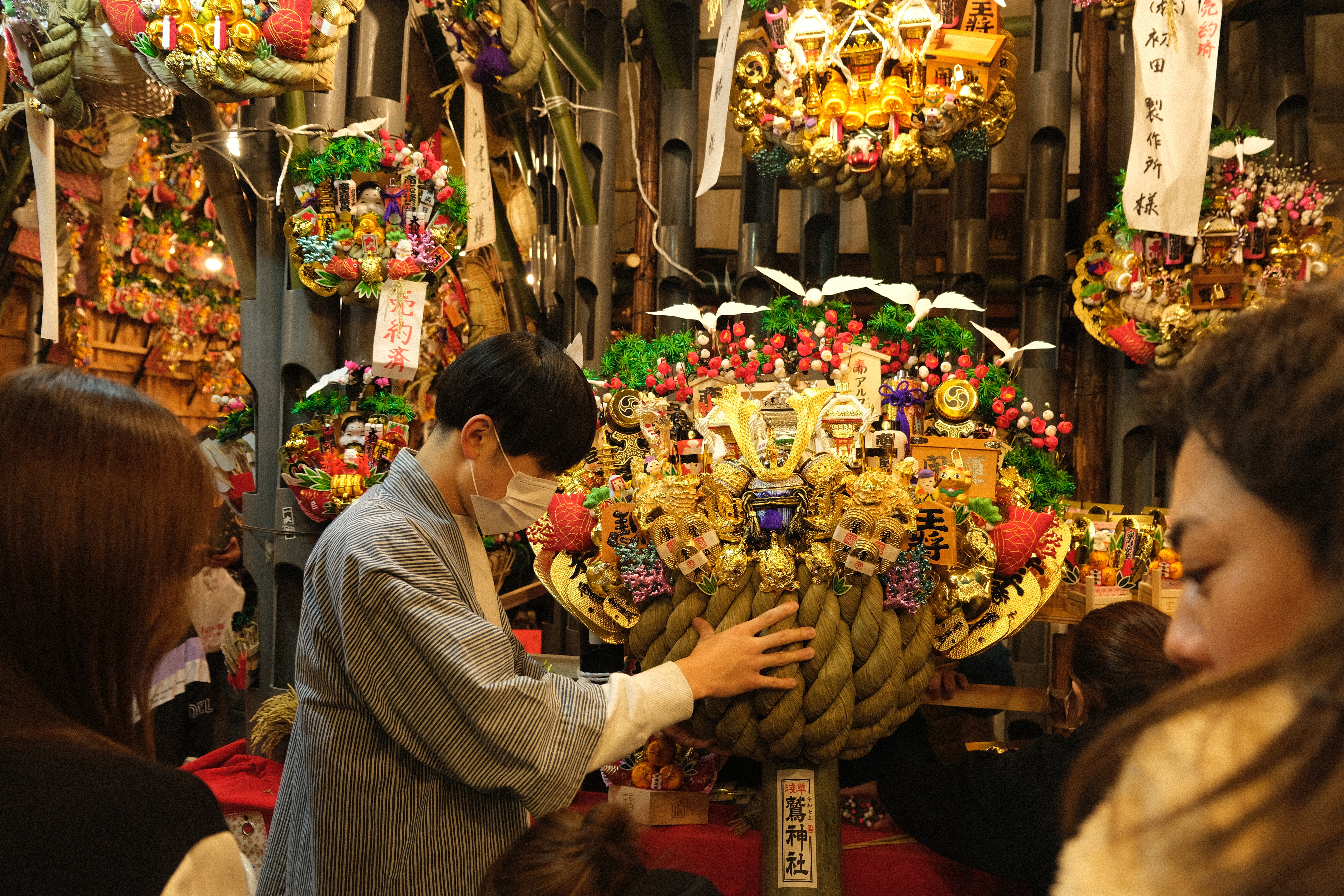
Tori-no-Ichi begins with the ichiban daiko drum at midnight. The shrine states that its kumade amulets, called kakkome, are given out from the moment the drum sounds, and the very first recipient also receives a gold koban coin as the "ichiban-fuda." Because of this, people wait specifically for the midnight opening.
Beyond that, plan your visit by purpose:
- For the kumade-shop atmosphere and tejime clapping: The market is liveliest from dusk into the evening once the lights come on, but this is also the most crowded time. A Japanese outlet that visited this year's Ichi-no-Tori reported that on Saturday evening the worship route was packed out to the edge of the road.
- For an easier visit: Ni-no-Tori falls on a Thursday, a weekday, so daytime is generally easier to move around. This is general experience, however, and actual crowds depend on the weather and time of day.
- Shrine rituals: The Yoimiya Kaiun Fukuju-sai is held at 11:15 pm on November 18, and the Washi Matsuri Tokubetsu Saigi at 1:00 pm on November 19. Both require advance reservations, and participants should check in 15 minutes before the start.
Kumade Amulets vs. Lucky Kumade Rakes
This is the most common point of confusion for first-time visitors.
Kumade amulets (kakkome) are given out by Otori Shrine only during Tori-no-Ichi. The shrine recommends first praying at the main hall and receiving a kumade amulet, then choosing a lucky kumade at one of the kumade shops.
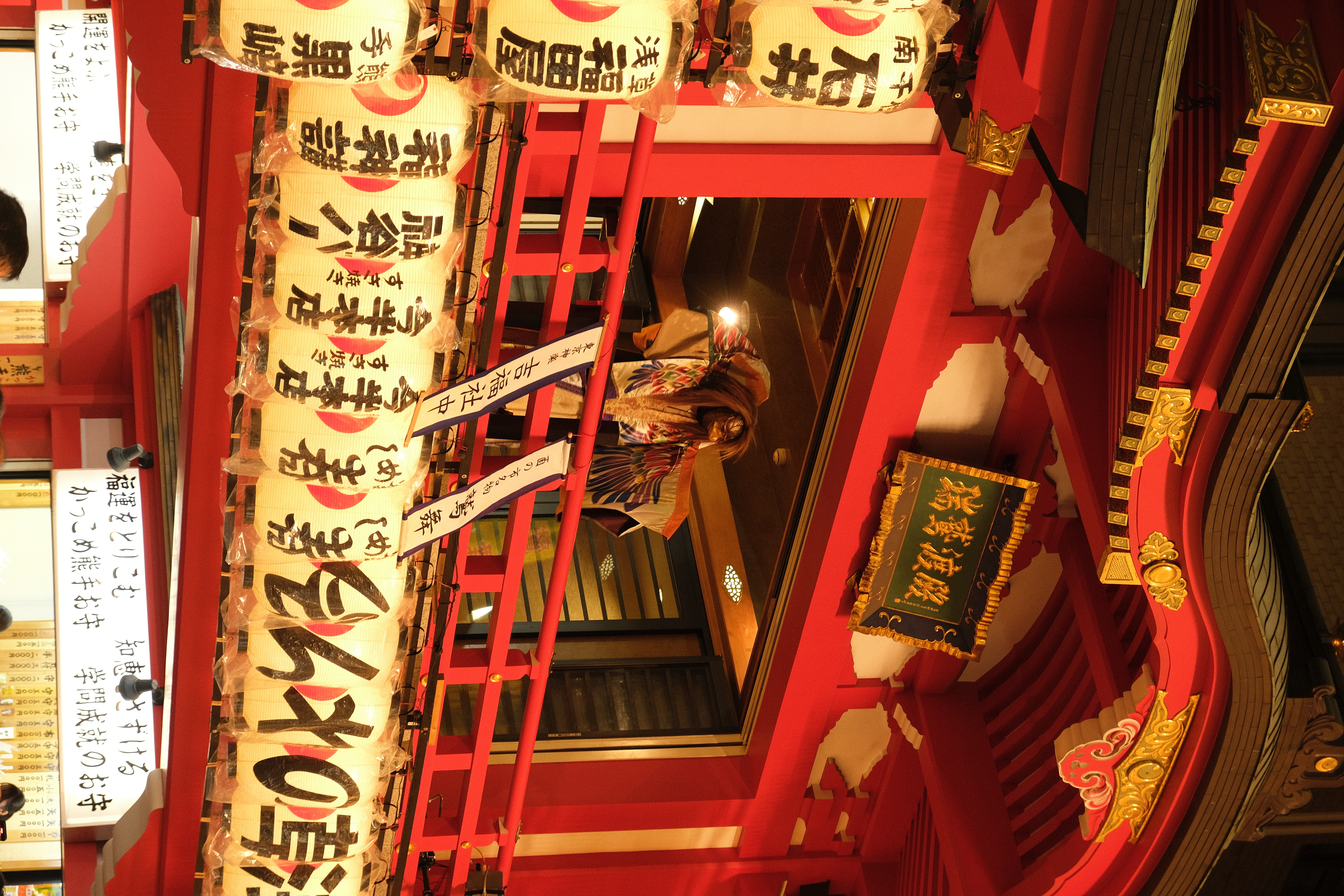
Lucky kumade (engi kumade) are sold by the kumade shops in and around the shrine grounds. They are decorated with auspicious items such as beckoning cats, Okame masks, rice bales and koban coins. According to the shrine's website, the smallest start from about 1,000 yen, large ones can reach several hundred thousand yen, and the most popular range is about 20,000 to 50,000 yen.
Kumade Customs: Bargaining and Tejime
Bargaining is a traditional part of buying a kumade. The shrine's website explains that the amount saved through bargaining is customarily left with the shop as goshugi (a congratulatory gift). In other words, even after the price has been negotiated down, buyers pay the original price.
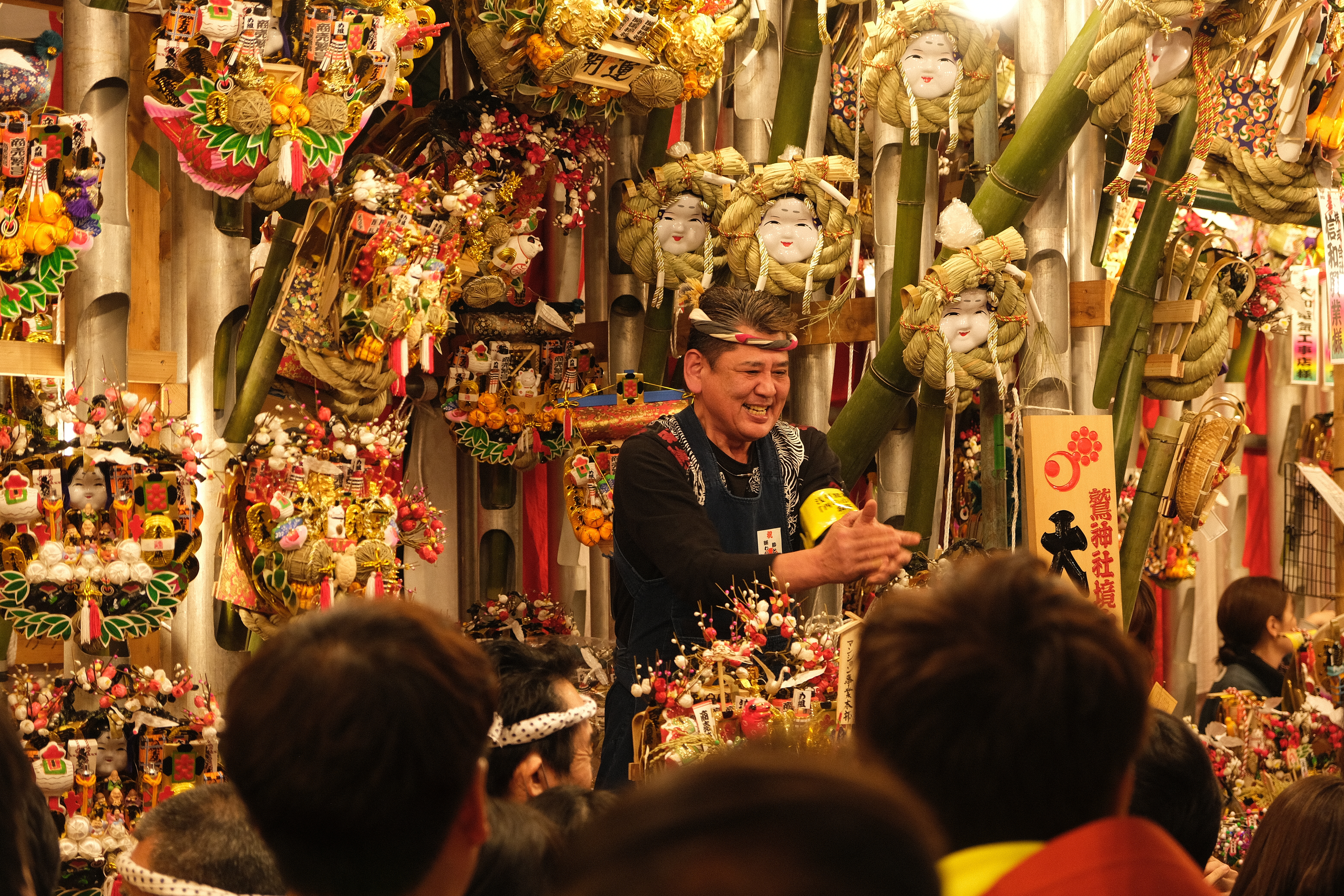
After the sale, the shop staff lead the buyer in tejime, a rhythmic clapping ceremony accompanied by festive calls. It is one of the most atmospheric moments of Tori-no-Ichi. If you only want to take photos, ask the shop for permission first and avoid blocking customers who are making a purchase.
A popular saying holds that you should buy a slightly larger kumade each year than the last, representing business and fortune that grow year by year. This is a folk custom, and choosing a small kumade for your first purchase is perfectly fine.
What Else to See and Eat
- Yatsugashira: A taro symbolizing rising in the world. According to the shrine's website, only one shop, to the right just after passing through the torii gate (shop name "Imokan"), still sells it.
- Kirizansho: A traditional Tori-no-Ichi sweet, also sold by one shop to the right just after the torii gate.
- Kogane mochi: Once a Tori-no-Ichi specialty, but the shrine's website notes that the shops that sold it have closed, so it is no longer available.
- Street stalls: Takoyaki, frankfurters, cotton candy, game stalls and more, generally from a few hundred yen (based on on-site reporting from this year's Ichi-no-Tori; actual prices vary by stall).
How to Get to Otori Shrine in Asakusa
The shrine's official website lists the following access routes:
From | Walking time |
|---|---|
Tokyo Metro Hibiya Line, Iriya Station, North Exit 3 | About 7 minutes |
Tsukuba Express, Asakusa Station | About 8 minutes |
Tokyo Metro Ginza Line, Tawaramachi Station | About 15 minutes |
Tobu Line / Toei Asakusa Line / Ginza Line, Asakusa Station | About 15 minutes |
JR Uguisudani Station, South Exit | About 20 minutes |
Toei Bus (Nippori Station ⇔ Kinshicho Station), "Senzoku" stop | About 2 minutes |
From the Senso-ji area you can walk north to the shrine, which also fits easily into a day of walking around Asakusa. Vehicle restrictions may be in place around the shrine on festival days, and signs on site indicate that the restricted hours are adjusted according to crowds. Driving, or taking a taxi to and from the immediate area, is not recommended.
Tips for First-Time Visitors
- Follow the worship route: Signs marking the worship route (sanpai junro) hang along the approach. When it is crowded, follow the flow and do not walk against it.
- Keep valuables secure: Stalls and crowds are dense, so consider wearing your backpack on your front.
- Think ahead about strollers: It becomes very crowded from evening onward, so families with small children may prefer to visit during the day.
- Bring cash: Stalls and kumade shops more often deal in cash, so it is a good idea to carry coins and 1,000-yen notes.
- Goshuin and photography rules: We could not find unified guidance on the official website for the festival period. Please follow on-site signs and instructions from shrine staff.
Why Stay in Asakusa for Tori-no-Ichi
Tori-no-Ichi is at its liveliest at night, and the ichiban daiko drum sounds at midnight. Staying in Asakusa means you can walk back to your accommodation after your visit, without worrying about the last train or crowded stations after the festival.

OTHER SPACE Asakusa is located in Asakusa 3-chome, Taito City, in the same northern part of Asakusa as Otori Shrine, about a 15-minute walk away (actual time varies with your route and the crowds).
After the market, you can relax at OTHER SPACE Café on the ground floor (open daily 7:00–22:00, last order 21:30), or take in night views of Senso-ji and Tokyo Skytree from the guest-only rooftop space.
FAQ
When is Tori-no-Ichi in 2026?
At Otori Shrine in Asakusa, Tori-no-Ichi 2026 is held on Saturday, November 7 (Ichi-no-Tori) and Thursday, November 19 (Ni-no-Tori), from 0:00 to 24:00 on both days. There is no San-no-Tori this year.
Why do people say there are more fires in years with a San-no-Tori?
The shrine's website notes that the origin of this saying is unclear. Common explanations include the dry late-November weather calling for care with fire, wives in the Edo period using it to discourage men from going out at night, and a folk belief that crows cawing at night foretell fires. There is no San-no-Tori in 2026.
Can I go without buying a kumade?
Yes. Many people come simply to pray, receive a kumade amulet, enjoy the tejime atmosphere at the kumade shops and browse the stalls.
Can I visit late at night?
Yes. The festival runs for 24 hours, so worship is possible late at night. Stall hours vary by shop, however, and not all of them stay open until 24:00.
Is it convenient to drive?
No. The shrine states that there is no parking on festival days and asks visitors to use public transport. If you must drive, do not park on the street; use a nearby paid parking lot instead.
Thank you for reading. Tori-no-Ichi is one of the evenings in Asakusa that most strongly evokes old Edo before winter sets in, and it shows the everyday traditions this neighborhood has carried for centuries. OTHER SPACE Asakusa will continue to share seasonal festival and walking information about Asakusa, so that each time you come to Tokyo, you can explore the city with greater ease.
Sources
- Otori Shrine, "This Year's Tori-no-Ichi" (2026 dates, hours, rituals): https://otorisama.or.jp/kotoshi.html
- Otori Shrine, "History" (origin, ichiban daiko, kumade amulets): https://otorisama.or.jp/yuisyo.html
- Otori Shrine, "Tori-no-Ichi Trivia" (kumade prices, bargaining and tejime, yatsugashira, kirizansho, San-no-Tori saying): https://otorisama.or.jp/mame.html
- Otori Shrine, "Access": https://otorisama.or.jp/access.html
- Otori Shrine, "Parking": https://otorisama.or.jp/parking.html
- On-site report (2026 Ichi-no-Tori crowds, stall prices, vehicle restriction signs): https://lifestyle.assist-all.co.jp/asakusa-tori-no-ichi-2026-review/